

Term life insurance is better for most families because it provides high coverage at a low cost, while whole life insurance is better for specific estate planning or legacy needs. This guide compares coverage amounts, premium costs, and special needs planning to help you choose the right policy for your household.
Coverage Amounts Needed
Choosing between term and whole life starts with determining how much coverage your family actually requires. The DIME method is a standard framework for calculating this need. It stands for Debts, Income replacement, Mortgage, and Education. This approach ensures your policy covers your financial obligations rather than just a round number.
Calculating Income Replacement
Income replacement is the largest component of your coverage need. A common rule of thumb is to purchase 5 to 10 times your annual income. This amount allows your surviving spouse to maintain their lifestyle and cover daily expenses while they adjust to a single income. If your spouse is a stay-at-home parent, you must also factor in the cost of childcare and household management, which can be substantial.
Debts and Mortgage Balance
Education and Final Expenses
Education costs for your children and final expenses for your own funeral and burial should also be included in your calculation. The National Funeral Directors Association reports that the median cost of a funeral with burial is approximately $8,300. Adding these figures to your DIME calculation provides a comprehensive coverage target. Whole life insurance is often used for smaller, permanent needs like final expenses, while term life handles the larger, temporary needs like income and mortgage.
Premium Cost Comparison
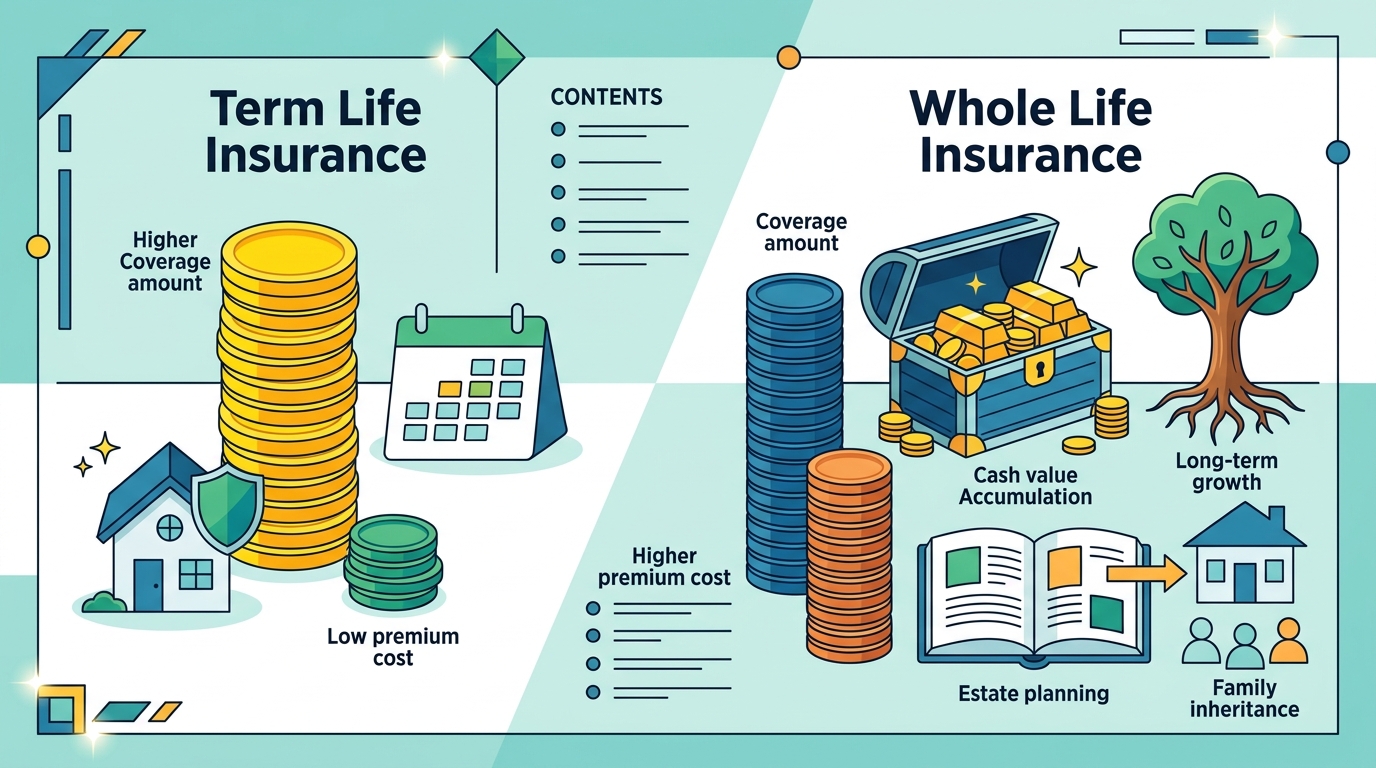
The most significant difference between term and whole life insurance is the cost. Term life insurance is a type of temporary coverage that expires at the end of the policy term. Whole life insurance is a type of permanent coverage that lasts for your entire life as long as premiums are paid. Because whole life includes a cash value component and guarantees coverage for life, it is significantly more expensive.
Term Life Premiums
Whole Life Premiums and Cash Value
Cost Efficiency Analysis
Special Needs Dependents
If you have a child with special needs, the choice between term and whole life becomes more complex. Special needs planning is a long-term strategy that often requires permanent coverage. A child with special needs may require care and support well into adulthood, which means the financial need does not end when they turn 18 or finish college.
The Role of Special Needs Trusts
A special needs trust is a legal tool that holds assets for a disabled individual without disqualifying them for government benefits like SSI and Medicaid. Life insurance is a common funding source for these trusts. The death benefit can provide the funds necessary to pay for care, housing, and other expenses that government benefits do not cover. Because the need for care is lifelong, a permanent policy like whole life or an irrevocable life insurance trust (ILIT) is often recommended.
Term vs Permanent for Special Needs
Term life insurance is generally not suitable for special needs planning because it expires. If your child is 30 and your 20-year term policy expires, they may still need support, but you will no longer have coverage. Whole life insurance provides a permanent death benefit that can be used to fund a special needs trust for the child's entire life. This ensures that your child is protected financially no matter how long they live. The higher cost of whole life is justified in this scenario because the need for coverage is indefinite.
ILITs and Estate Planning
For families with significant assets, an ILIT is often used to hold the life insurance policy. This structure removes the death benefit from your taxable estate, which can save on estate taxes. The ILIT can then distribute the funds to the special needs trust or directly to the child's care providers. This requires coordination with an estate planning attorney to ensure the trust is set up correctly. DG Life Group works with families in Dallas to structure these policies in a way that aligns with their estate planning goals.
Key Takeaways
- Term life insurance is the most cost-effective way to replace income and cover debts for most families.
- Whole life insurance is a permanent policy that builds cash value but comes with significantly higher premiums.
- The DIME method helps you calculate the exact coverage amount you need based on your debts, income, mortgage, and education costs.
- For special needs dependents, permanent coverage like whole life is often necessary to fund long-term care and special needs trusts.
- Term life premiums are level for the policy term, but they expire when the term ends, requiring you to buy new coverage if needed.
- Whole life cash value can be accessed via loans, but the growth rate is typically lower than market investments.
- An independent broker can compare policies from multiple carriers to find the best fit for your specific health and financial profile.
Frequently Asked Questions
Can I convert term life to whole life?
Yes, many term life policies include a conversion feature that allows you to switch to a permanent policy without a new medical exam. This is useful if your health changes or your needs evolve. However, the conversion is typically subject to a deadline, such as within the first 10 or 20 years of the policy.
Is whole life insurance a good investment?
Whole life insurance is not primarily an investment; it is an insurance product with an investment component. The cash value grows slowly and is subject to fees. If your goal is investment growth, other vehicles like index funds or retirement accounts may be more efficient. Whole life is best used for permanent insurance needs or estate planning.
How much term life insurance do I need?
A general guideline is 10 times your annual income, but the DIME method provides a more accurate number. You should add your debts, mortgage balance, and education costs to your income replacement target, then subtract any existing savings or coverage.
Does whole life insurance pay out if I die?
Yes, whole life insurance pays the death benefit to your beneficiaries if you die while the policy is in force. The cash value is also paid to the estate or beneficiaries, though it is usually less than the death benefit.
Can I use whole life cash value for retirement?
You can borrow against the cash value or surrender the policy to access the funds. However, loans must be repaid, and surrendering the policy may result in a taxable event. It is important to understand the tax implications before using cash value for retirement income.
Which is better for a single parent?
For a single parent, term life insurance is often the best choice because it provides high coverage at a low cost. This ensures your child is financially protected if you pass away. If you have a child with special needs, you may need to consider permanent coverage as well.
Conclusion
Choosing between term and whole life insurance depends on your specific financial goals and family circumstances. For most families, term life insurance offers the best value for income replacement and debt coverage. Whole life insurance is a better fit for those who need permanent coverage, such as families with special needs dependents or those with significant estate planning needs. By understanding the differences in cost, coverage, and cash value, you can make an informed decision that protects your family's future. Schedule a free consultation with DG Life Group to discuss your options and find the right policy for your needs.