

Accelerated Death Benefits: Which Life Insurance Policies Include Serious Illness Coverage
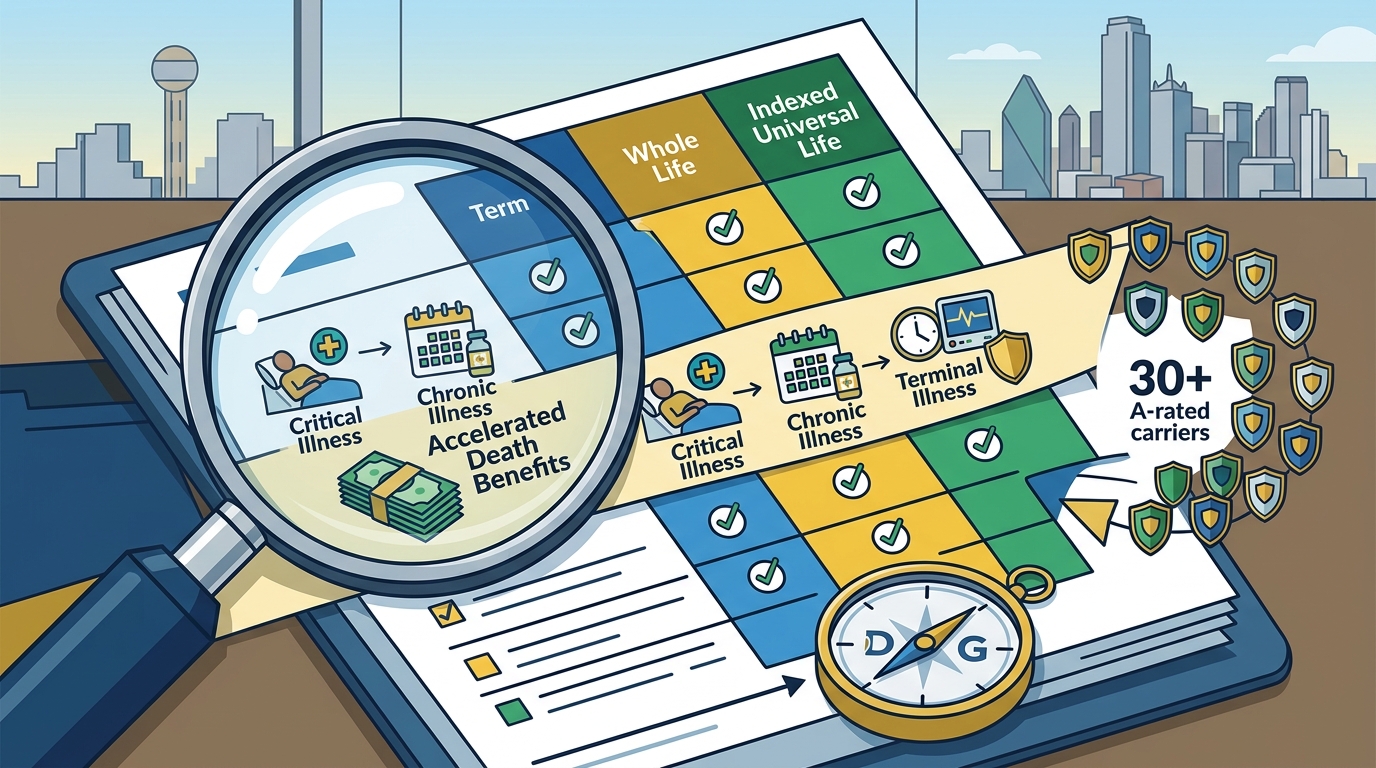
Accelerated death benefits allow policyholders to access a portion of their life insurance death benefit while still alive if diagnosed with a qualifying serious illness. This feature is available as a rider on most modern term and permanent life insurance policies, including whole life and indexed universal life. DG Life Group helps Dallas families compare these options across 30+ A-rated carriers to find the right fit for their health and financial goals.
Qualifying Illness Definitions
Life insurance carriers define qualifying illnesses through specific medical criteria. These definitions are not universal; each insurance company sets its own guidelines for what conditions trigger accelerated benefits. Generally, the most common qualifying conditions include terminal illness, chronic illness, and critical illness.
Terminal Illness
Terminal illness is a condition where a physician certifies that the insured has a life expectancy of 12 months or less. This is the most widely accepted category across all carriers. The certification usually requires a statement from a licensed physician confirming the prognosis.
Chronic Illness
Critical Illness
Critical illness is a specific, severe diagnosis such as a first-time heart attack, stroke, or certain cancers. Unlike chronic illness, which focuses on functional impairment, critical illness benefits are triggered by the diagnosis itself. The specific list of covered conditions varies significantly by carrier and rider type.
The Living Benefits Rider
A living benefits rider is an optional add-on to a life insurance policy that provides access to the death benefit during the policyholder's lifetime. This rider transforms a policy that only pays after death into one that offers financial protection while you are alive. DG Life Group specializes in these riders because they address the financial devastation of serious illness, not just the loss of income.
How the Rider Works
Why It Matters for Families
Medical bills, lost income, and caregiving costs can deplete savings quickly. A living benefits rider provides a tax-free source of funds to cover these expenses. This allows families to focus on recovery rather than financial survival. It is a critical component of a comprehensive financial protection plan.
Cost of Riders
The cost of a living benefits rider varies by carrier, policy type, and the specific benefits included. Most riders are priced as a percentage of the base premium or as a flat monthly fee. It is important to understand that adding a rider increases your total premium.
Factors Influencing Cost
Several factors determine the price of the rider. Age and health status at application are primary drivers. The type of coverage included (terminal, chronic, or critical) also affects the price. Critical illness riders are typically more expensive than terminal illness riders because they cover a broader range of conditions. The amount of the policy also plays a role, as some carriers charge a percentage of the face amount.
Value Consideration
Available Policy Types
Accelerated death benefits are available on both term and permanent life insurance policies. The mechanics are similar, but the long-term implications differ. Understanding the differences helps you choose the right policy type for your needs.
Term Life Insurance
Term life insurance is the most affordable option and offers living benefits riders on most plans. If you are diagnosed with a qualifying illness during the term, you can access the benefit. However, if the term expires before a diagnosis, the coverage ends. Term policies are ideal for income replacement and short-to-medium-term protection.
Permanent Life Insurance
| Policy Type | Living Benefits Availability | Cost Profile | Best For |
|---|---|---|---|
| Term Life | Optional Rider | Lowest Premium | Income Replacement |
| Whole Life | Often Included or Optional | Higher Premium | Lifelong Protection & Legacy |
| Indexed Universal Life | Optional Rider | Variable Premium | Retirement Income & Protection |
Key Takeaways
- Accelerated death benefits allow you to access your life insurance money while alive if diagnosed with a serious illness.
- Qualifying illnesses typically include terminal, chronic, and critical conditions, with specific definitions set by each carrier.
- The living benefits rider is an optional add-on that increases your premium but provides significant financial security.
- Advances are generally income-tax-free if the policy meets IRS requirements.
- Both term and permanent life insurance policies offer these riders, but permanent policies provide lifelong protection.
- The amount advanced is deducted from the final death benefit paid to your beneficiaries.
- Carrier guidelines vary, so comparing multiple A-rated carriers is essential to find the best fit for your health profile.
- DG Life Group can help you navigate these options and select the right policy and rider combination.
Frequently Asked Questions
What is an accelerated death benefit?
An accelerated death benefit is a feature that allows you to receive a portion of your life insurance death benefit while you are still alive if you are diagnosed with a qualifying serious illness.
Which illnesses qualify for accelerated benefits?
Qualifying illnesses typically include terminal illness (12 months or less to live), chronic illness (inability to perform two ADLs for 24 months), and critical illness (specific diagnoses like heart attack or stroke).
Is the money I receive taxable?
Generally, no. If the policy meets specific IRS requirements, the advance payment is treated as part of the death benefit and is income-tax-free.
Does using the rider reduce my death benefit?
Can I add a living benefits rider to an existing policy?
In some cases, yes, but it depends on the carrier and your health status at the time of the request. It is often easier to include the rider when you first apply.
How much does a living benefits rider cost?
The cost varies by carrier and policy type. It is usually a small percentage of the base premium or a flat monthly fee. Critical illness riders are more expensive than terminal illness riders.
Which policy type is best for living benefits?
It depends on your goals. Term life is more affordable and good for income replacement. Permanent life offers lifelong protection and cash value, which may be better for long-term planning.
Conclusion
Choosing the right life insurance policy with accelerated death benefits requires understanding the specific definitions of qualifying illnesses, the cost of riders, and the differences between policy types. DG Life Group provides independent guidance to help you navigate these options. We compare policies from 30+ A-rated carriers to ensure you get the best coverage for your unique situation. To discuss your options, schedule a call with our team today.